Folklore in Mandrake
After nearly sixteen years working in the Victorian milieu for Fallen London, Mandrake is giving us an opportunity to draw on a whole new swathe of historical and folkloric sources, and we've been making the most of it.
Mandrake is set in a village called Chandley, whose people have to get along with all sorts of neighbours, some of which are far from human. There are regal woods-gods; dangerous, rootless spirits roving the wilds; and gentler, more domestic sprites that nevertheless abide by their own, sometimes obtuse, rules.
Here we present a selection of the folklore that has inspired us while inventing the world of Mandrake, in case any of them catch your interest as they did ours.
Sunken Lands
Atlantis might be the most famous sunken land, but it's far from the only one. For Mandrake, we've taken inspiration from folkloric examples closer to home: lost Lyonesse that lay beyond Land's End in Cornwall, and became associated with Arthurian legend. The lost Brittany city of Ys (or Kaer-Ys), drowned by mortal folly, which features in the collection of Breton folk-songs known as the Barzaz-Breiz. Cantre'r Gwaelod, a land said to lie off the coast of Cardigan, in Gwynedd.
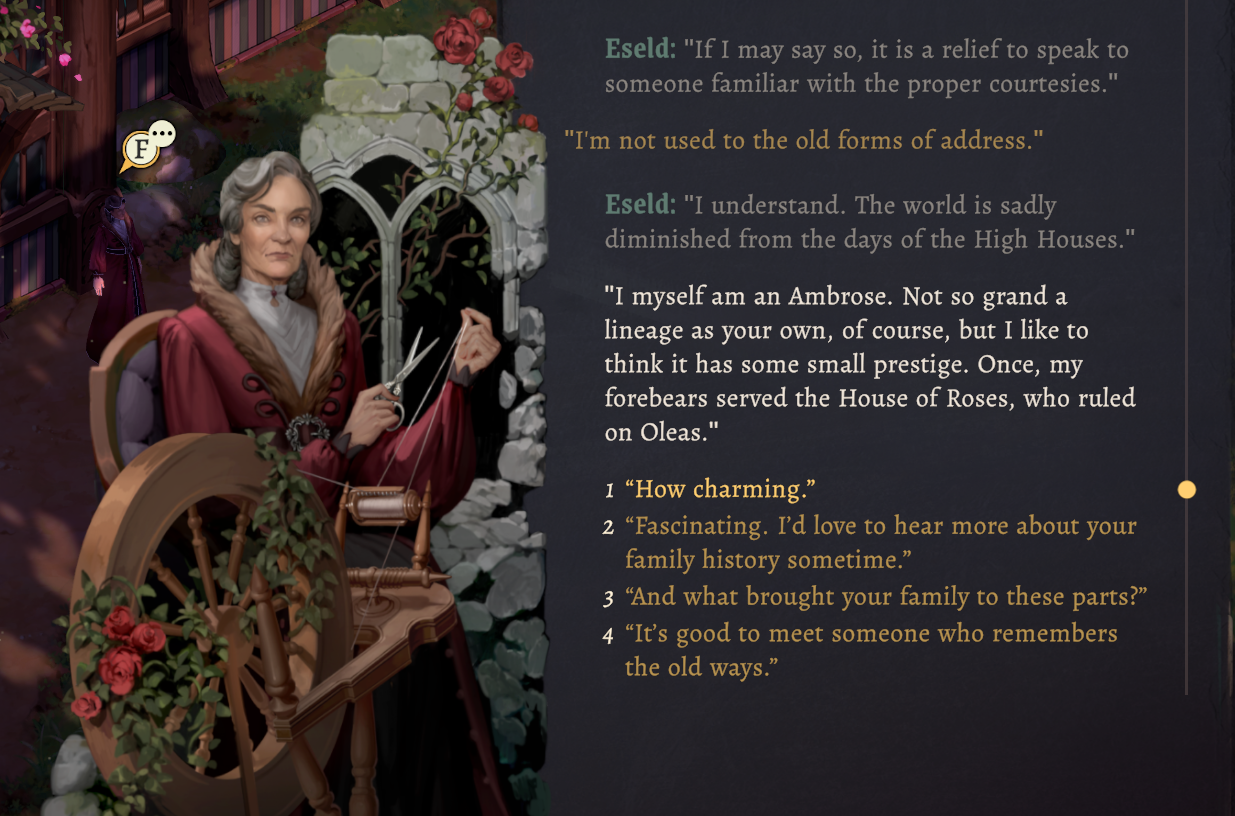
In Mandrake, our drowned isle is poor Oleas, which lay just off the coast near Chandley, and was home to the Rose dynasty – the historic rivals to the Mandrakes, our protagonist’s family house. The locals say that on quiet evenings, you can still hear the bells of Oleas ringing under the waves…
Seal-Folk
Haunting the sunken streets of Oleas are the korrigan, who swim through the sea in the shape of seals, but can take human form on the shore. They are attuned to the tides of fate, dangerous to cross, and have magics of their own. Chandley's local sea-fisherman, Ruan, knows to treat seals with the utmost courtesy.
These seal-folk are of course primarily inspired by the Scottish legends of selkies, with their seal-skins, and their troubled relations with mortals. A favourite modern version of the archetypal selkie story can be found in Kevin Crossley-Holland's short collection Outsiders, which retells a half-dozen folktales from the point of view of those who don't fit in. But their name and their sorcerous inclinations were inspired by the korrigan, another bit of Breton folklore: deadly, capricious fey beings whose demands were dangerous to defy.
Tolkien wrote a great, grim, possibly unpronounceable poem about a ‘corrigan’ called The Lay of Aotrou and Itroun, which has been released in a recent edition along with drafts of a couple of earlier poems he wrote about the corrigan. They obviously made an impression on him!
Chimney-Gods
You might have seen our friendly-faced character Hob Halfling, who lives in the hearth of your recovered family lodge.
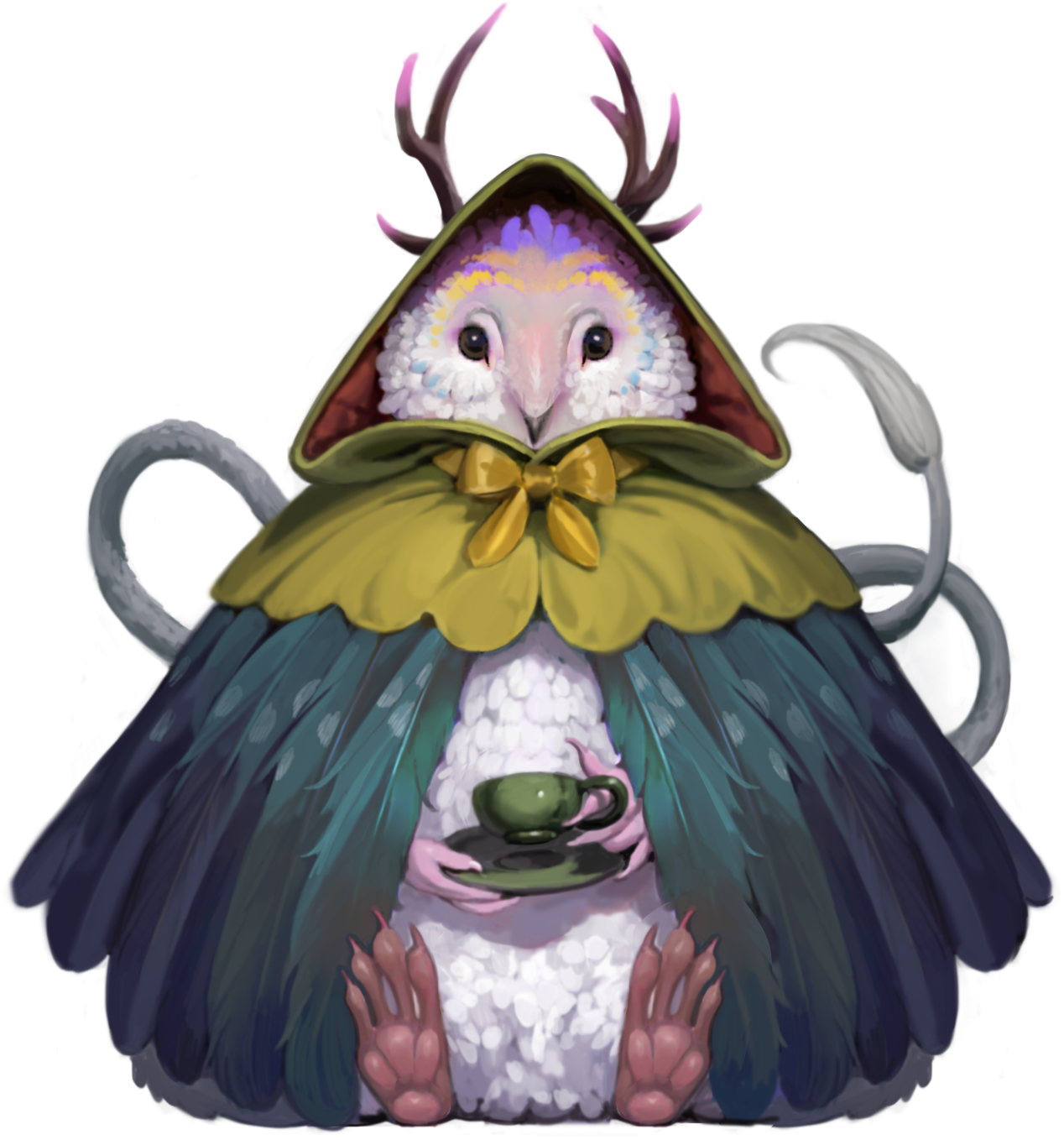
As a helpful domestic spirit, Hob is largely inspired by brownies: shy fairy creatures who lived in a home and came out at night to keep the house in order and do chores… as long as they were well-treated, and you didn't offend them with an inappropriate gift. There are countless brownie stories, but one of my favourites is one from Sunderland: the Cauld Lad o' Hilton. According to Robert Surtees in 1820, the Cauld Lad would cause chaos if Hylton Castle, where he lived, was left in good order – or tidy it immaculately if it was left in a mess. He played largely harmless pranks on the inhabitants, but was eventually banished by the traditional method of leaving out a set of clothes for him. As soon as he found them he put them on, admired himself in a mirror, and left the house never to return. 'Here's a cloke, and here's a hood; the cauld lad o' hilton will do no more good.'
Surtees' version seems to consider the Lad a brownie, but says that it had become identified with the ghost of a murdered servant whose bones were later found in a pond on the grounds. Folklore is rarely neat – stories tangle with each other, or spin off new threads.
There's no murder in Hob's origin, anyway. He's less mischievous than the Cauld Lad, too, but it's still best to keep him friendly with the occasional gift of food.
Ancient Medics and Scholarship
One of our characters, Malory Rosevere, is currently a pigkeeper, but is descended from a long line of doctors who were famous in the region. This concept was a later addition to their character, inspired by the Meddygon Myddfai, or Physicians of Myddfai. The physicians were a famous lineage of doctors in Wales, practiced medicine in an unbroken line from the 13th century to the 18th! Famous throughout Wales, their services were often called upon, and as time passed, so great was their reputation that they became associated with magical remedies and practices, too. Claiming a remedy was one used by the Meddygon Myddfai was a way to grant it a high pedigree.
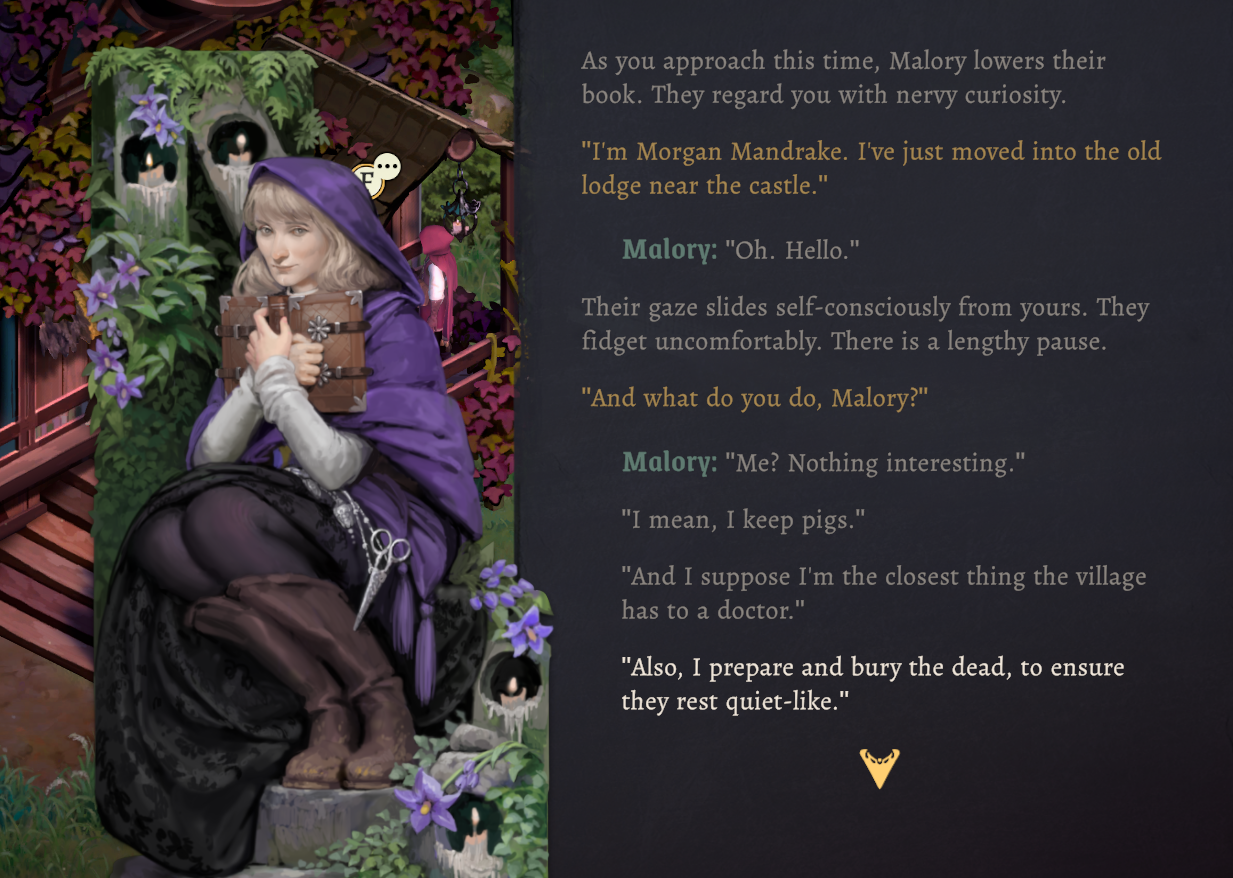
Malory is also something of a scholar, and proudly owns a small collection of books. Perhaps they'll lend you one – we're working on a scholarship system for Mandrake, allowing you to study in the evening to discover more about the setting's history and myths. Some of the books you'll be able to read draw inspiration from historical texts, like the medieval Welsh Triads.
Restless Spirits
The lands around Chandley are plagued by an unusual number of roving, restless spirits, which without a place to make their own, grow increasingly eccentric and perilous. Josselin, the local witch, calls them the peregrini, and implies there's a reason they're so common hereabouts.
Each of the peregrini is inspired by different folklore. Anyone familiar with kelpie mythology will recognise the Salt Mare, who only runs on water, and who carries anyone foolish enough to mount it to the bottom of the sea. And wizened old Granny Jakes might seem friendly, but why is she so keen to hide her feet from you? And for you to try a cup of her delicious, homemade, apple-y avalack? Beware: one of her inspirations is the Russian story of Misery. In the version of the tale I read, Misery is a pitiful creature found in a hole who – if you help him – will scramble up onto your back and make himself comfortable. Once he's there only you can see and hear him, and every time you take a drink, Misery demands another. Before long, he drives you to ruin, all the time claiming he's your only friend…
Other Sources
There are many more inspirations we could talk about, like the fact that the many gods of the sea in Mandrake are partly inspired by the Irish Voyage of Máel Dúin, with its magnificent list of completely bizarre islands (tag yourself: I'm "The island of the horse-like beast who pelts the crew with the beach").
But if you're looking for some good modern folklore to read, in addition to the books we've mentioned already, we can highly recommend Amy Jeff's evocative and ingenious books Storyland, Wild and Saints, which retell medieval folk stories from overlooked perspectives. I've also been enjoying Kym Deyn's unsettling, visually rich and occasionally lightly traumatic collection of poetry, Folkish, which often draws on folklore from the north of England, and includes poems about the Lambton Worm, St Hild, Old Mother Shipton and Janet o' the Dales (who I'd never come across before).
We hope there’s something in this list that stirs your interest!